

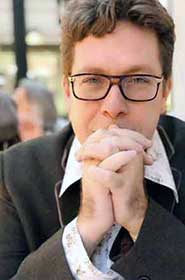
During this interview and Mark Malatesta review, author Hasu August talks about her book, her best tips for writers, and her experience working with former literary agent Mark Malatesta, who helped Hasu get a traditional publisher and book deal. Hasu is the author of the novel, The Envelopes, published by Earnshaw Books, a traditional publisher that publishes a wide range of fiction and nonfiction books. A hub for stories, memoirs and history from China, Asia and beyond, and a nurturing platform for new authors, Earnshaw Books offers a unique and enticing glimpse into the world through words.
* * *
Mark Malatesta Review by Hasu August
“I met my publisher and signed the contract. It’s exciting! You helped me hang on and keep hope alive when I was frustrated. Sometimes, when you talk with a professional, they don’t understand your feelings. You’re always encouraging, which is unusual. You’re very human. I enjoyed the journey with you just as much as the outcome. I’m really happy about that. Thank you very much, and let’s keep in touch.”
Hasu August
The Envelopes (Earnshaw Books),
previously known as The Evidence of Her Life

The Mark Malatesta review above is an edited excerpt. Click here to see the complete Mark Malatesta review, and click here to see more Mark Malatesta reviews.
* * *
Hasu August Interview
During this 53-minute interview with Mark Malatesta, author Hasu August talks about her novel, The Envelopes, published by Earnshaw Books. During this interview, Hasu also shares advice for other authors, and she talks about her experience working with Mark Malatesta, a former literary agent turned author coach and consultant, who helped Hasu get a publisher and book deal.
* * *
* * *
Part 1 – Mark Malatesta Interview & Review
Hi everyone, this is Mark Malatesta with TheBestsellingAuthor.com and Literary Agent Undercover, helping authors of all genres—fiction, nonfiction, and children’s books—to write, publish, and promote their work.
This interview will be approximately 60 minutes, and for those of you who don’t know me, I’m the writer who went undercover and became a literary agent, to find out how to get my own books published. A literary agent is someone who gets authors book deals with traditional publishers like Random House.
After running a literary agency for approximately 5 years, I then served as the Marketing & Licensing Manager of Blue Mountain Arts (that’s the book and gift publisher that invented e-greetings, and later sold their e-card division for close to one billion dollars).
Today I’m an author coach and consultant who’s helped hundreds of authors get offers from literary agents and/or traditional publishers, and I love promoting my authors.
They’ve gotten 6-figure book deals and advances with major publishers such as Random House, Simon & Schuster, and Thomas Nelson. They’ve been on the New York Times bestseller list, had their work picked up for TV, stage, and feature film (with companies like Paramount Pictures, DreamWorks, Lionsgate, and HBO Max). They’ve won countless awards. And they’ve had their work licensed in more than 40 countries, resulting in millions of books sold.
Who knows?
You might be next!
If you believe your book has bestseller or commercial potential, visit our website at TheBestsellingAuthor.com, primarily designed for authors who want to get a traditional publisher such as Random House.
We offer a wide range of products and services such as audio interviews like this, articles, one of the most popular agent directories, and 1-on-1 author coaching and consulting.
Again, you can learn more at TheBestsellingAuthor.com.
Now, let me introduce today’s special guest.
Part 2 – Mark Malatesta Review & Interview
Hasu August is the author of “The Envelopes” [previously titled “The Evidence of Her Life], published by Earnshaw Books. She has lived and worked in Singapore, Japan, China, and the United States—where she earned her MBA.
Hasu has served in many positions as an executive of finance operations, including worldwide CFO of a division in a multinational company. She’s been writing fiction all her life, and tells stories through her photography.
Hasu’s debut novel is a contemporary story that bridges the commercial/literary divide—a multicultural tale about ordinary people in extraordinary circumstances.
The novel confronts darkness, and shines light on the undying love for—and devotion to—cause and country. It portrays the ongoing struggle taking place in China, a colorful country that continues to capture the world’s attention, whose economic power continues to increase as its moral foundation continues to deteriorate.
I had the privilege of working with Hasu to help her secure a publisher. Now I’m proud to be helping her promote her book. And, as you might imagine, during this interview Hasu is going to share her best advice for you regarding how to write, publish, and promote your book.
To learn more about Hasu, visit HasuAugust.com, and I’m going to spell that for you H-A-S-U. Then August, like the month: HasuAugust.com.
So welcome, Hasu.
Part 3 – Mark Malatesta Interview & Review
Hasu August: Hello, everyone! This is Hasu August, and Mark, thank you for having me here.
Mark Malatesta: My pleasure. It’s always so much fun to celebrate getting to the final destination. I guess there’s never a destination. Yes, of course we’re supposed to enjoy the journey, but it sure is fun to celebrate the moment when a book deal has been had, and we can promote the book. So let’s get into it. You know I already just told everybody a little bit about the book. But will you take a little bit more time and tell everybody listening or reading the transcript more about it?
Hasu August: Okay, yes. So my book is a novel with a setting in China with international flavor, that tells the story about love and devotion, through the eye of a young woman named Jade. She works as a human resource professional in a multinational company, and she marries into a notable family accidentally, and seems to have a perfect life ahead. But a series of unexpected tragedies happen, and tear the threads of her identity, and the relationships of her father-in-law, who is the top official of a major city, who is making decisions, jeopardizing the safety of her unborn baby. In the meantime, a case of corruption her coworkers have uncovered could endanger them all.
Jade and her loved ones survive with their unfailing love for, and devotion to, cause and country, while they are coping with loss, fear, etc. So, generally speaking, my novel portrays ordinary people’s love and devotion, which transcend time as well as cultural, social, and economic differences. So that’s, overall, my novel. I hope people who are interested in the themes similar to that I am trying to convey would enjoy reading my novel.
Mark Malatesta: I don’t want to throw you off track here by asking you the occasional extra question that I didn’t send you in advance. But I want to slip one in here. Did you find it easier writing, partly from personal experience, like you shared that your protagonist is working with a multinational company? We know that’s part of your background. So do you find that some of what was familiar to you makes it easier for a writer, or harder, to detach?
Hasu August: Yes, that is a very good question. I will touch on this also later. Yes, it is easier, in a way, because this is what I know the best. So this is what I want to write. It’s harder also. I am so familiar with the things that I know, but I want to write fiction. I want to give some imagination. So it is hard if I know the things, the background about the story. I could be confined to this, and then it’s kind of a hurdle for my imagination. I think it’s a double-edged sword, actually at the same.
Generally speaking, I think it’s a matter of how I am going to transform what I’m familiar with into another form, which is probably more interesting to readers.
Mark Malatesta: Right? You and I both know how hard it is to get published, and probably most people listening to this or reading the transcript know that. But let’s take a little bit of time to celebrate that, and you can do the short version of this story the long version. You can share how long it took, or things like that. But most of all, I want you to relive the day that you first got the news that you really had a book deal. What were you doing that day? How did you get the news? How did you react? Have you done anything to celebrate?
Part 4 – Mark Malatesta Review & Interview
Hasu August: Okay, so indeed, it took me quite a long time to try to get an agent, to no avail. However, with your encouragement, Mark, and feeling support, I continued my journey, of finding a home for my book, submitting my manuscript to select publishers. I had become used to getting rejection. So one day, when I received an email and read the first sentence, “We have reviewed your book,” automatically I thought the next sentence must be, “And we regret that we have to pass.”
Well, it turned out that the next sentence was, “And we would be interested in publishing it.” To be honest, I was not thrilled at that moment. Seeing in hindsight, maybe because it’s just a thing to feel real but then, the next day I realized, “Oh, my God! It happened. Unbelievably, it happened. A publisher is interested in my novel!” I thought about how all this time Mark has known there must be a home for my book. He must be a genius. He really did believe all the time, and kept me trying.
So, yes, Mark, I have to admit it was your faith in my work that kept me from giving up, and yes, this book offer became a milestone for my journey of writing. And yes, I did celebrate it by going on a short vacation trip in a nearby country. That place is called Penang in Malaysia. It is a beautiful historical city. Its beauty has passed the test of time, and it’s still attracting people. I think there is a meaning for me, because I am hoping that my book can also pass the test of time.
Mark Malatesta: Very nice. I love that. You’re a true writer, looking for, seeing, finding, and applying meaning to those different things and moments.
Hasu August: Thank you for that.
Mark Malatesta: It’s so hard and sometimes, so sad. I can’t know for sure if someone’s going to make it, but I can know if someone’s good enough. You’re definitely in that category where it’s like, well, okay, we don’t know how it’s gonna turn out. But I’m so grateful you kept going because I knew you had a real chance. You’re unusual. You really stuck with it longer than most people would .Sometimes that’s the difference. I mean, you still need a good book. You need the best query, letter, and all of that you can have. But sometimes the deciding factor is just being willing and able to keep going.
Hasu August: Mm-hmm. Yes.
Mark Malatesta: I say it’s sad because sometimes there are other authors like you that would have made it if they just sent out that next batch of submissions, right?
Hasu August: Yes.
Part 5 – Mark Malatesta Interview & Review
Mark Malatesta: Alright, so let’s go back in time now and start at the beginning of your journey as an author, way before we met. When did you first get the idea you might be a writer or author?
Hasu August: I think I cannot remember the exact happening that caused my interest in writing, but I do remember when I was in high school, I fell in love with writing essays. Then one of my essays was chosen and published in a magazine. As a youngster, naturally, I started to dream what I wanted to do with writing. I think that was the first time I got the idea that I might want to become a writer in the future.
Mark Malatesta: Do you remember if we put that in your query letter? If you told me that you had an essay or something published in a magazine at a young age? Do you remember?
Hasu August: I can’t, I’m sorry.
Mark Malatesta: That’s okay, it’s just how my mind works. I definitely would have mentioned that in the query if I knew that, so I was wondering if we put that in there. It might seem silly, but I want people to understand who are listening to this recording or reading the transcript, if they’ve ever hoping to get published, that part of a pitch is helping an agent or publisher understand the book. The other part is helping them trust you.
It may not seem like a big deal, but if we have a query letter that says, “I’ve never really written anything in my life, but I recently decided to write a book, and I think it’s good,” that doesn’t sound nearly as good as somebody who says they’ve been writing for much or most of their life, they’ve been intending to become a published author beginning at a young age when they had something published in a national contest or magazine or whatever like that. That person seems maybe born to do this, with the talent to do this.
You don’t need that to get an agent. You can sometimes just create your talent with hard work. Anyway, I’m always thinking about trust in in a query as much as here’s what the book’s about. Okay, now, let’s talk about the all the writing you did since that moment, up until the time you wrote the novel. I think, in your bio, I mentioned you’ve been writing most of your life. But what did you write between the time of that essay and the time of finishing this novel?
Hasu August: In the beginning, as I just mentioned, I wrote essays, mainly expressing my ideas, thoughts, and emotions inspired by daily life. But when I furthered into university, I started to write short stories. Although my major had actually nothing to do with literature, somehow I felt the urge from inside of me to write the stories I wanted to share. Maybe one of the reasons is I started to experience more.
I’m sensitive to what’s happening around me. When I see, feel, or hear something it starts to form ideas in my mind…the name, probably, of a story. This is my first novel. Before that it was just short stories.
Part 6 – Mark Malatesta Review & Interview
Mark Malatesta: How did you get the idea for this book?
Hasu August: You know, I’ve liked moving around, crossing borders, and travelling to or staying in different places. I believe that has enriched my life experiences, which in turn became the foundation for book ideas to be generated, particularly in the case of this book, thanks to my working and staying in China for quite some time. So the life experiences that I directly or indirectly obtained there actually inspired me to write a story I believe is worth sharing.
Mark Malatesta: As your author education goes, from that standpoint, it’s all the writing that you’ve done. But then the things that have informed or inspired your writing, such as reading you’ve done, or formal study or reading books on craft, or any writing programs, conferences, workshops, seminars… Some people have a lot of that, that impacts the writing. Other people not at all. What kinds of things like that, if anything, have impacted your writing? And if there’s any suggestion you have for writers along those lines, let’s talk about that for a minute.
Hasu August: As a matter of fact, my official learning about writing was up to university. But just as a fundamental education, as I mentioned before. My major had nothing to do with literature or the English language. However, I’ve kept reading and writing all the time. I think I just simply love it. I read eclectically, but with particular interesting novels, which I think I have had quite some impact on my writing. Also, I read books on how to write novels, on the plotting , design, linguistical style, etc. on the technical side.
But to me, learning writing is a continuously daily practice, and I don’t get the pressure from deadlines, of showing results which you can usually get if you go to a school or workshop for intensive learning. Through reading I set the benchmarks for my writing. I just take my own pace to allow myself to grow slowly. It doesn’t mean I don’t feel an urge or struggle of completing a book. But to me the more haste, the less speed, is quite true.
Furthermore, a book idea never came to my mind in overnight fashion. In my case a book idea took years to form and mature, while I was writing piecemeal.
Mark Malatesta: Interesting. I love that. I’m not used to hearing that, and I think that’s good. I’m sure you’re not the only person like that, and they couldn’t feel more confident that that’s okay, you know, that it can work that way.
Hasu August: Yeah. And, even after the book was finished, editing and rewriting seemed never-ending to me. So, in a way, my writing journey has been an endless self-education process, actually. But, on the other hand, I worked with editors who helped me improve my writing. And you, Mark, helped me make my writing become visible to others also. So really, for me, it was not a formal education, but a never-ending process.
Mark Malatesta: Exactly, like some people in life might not think they have a formal self-help or personal development education. But if you live life, you’re gonna get one. [Laugher] I liked what you said about the urgency and having that balance. My wife and I have those conversations all the time. She’s the big thinker. I wouldn’t be where I am if I didn’t have her influence. Not nearly at this level.
It’s a balance, right? If you don’t have urgency and push yourself and challenge yourself, you’re never going to grow or accomplish anything. You’ll never be or have anything. But at the same time, just make sure you don’t overdo it. If all you’re looking at is tomorrow and what’s next and what you don’t have yet, you’re gonna be miserable. It’s trying to find that sweet spot as a writer.
I bring this up, partly because that’s what sustained you and helped you get to the finish line. You weren’t delusional or completely impatient. You were willing to take the time required, right? How to write a query letter and all those things are part of what’s really important in getting an agent or publisher. But this mindset stuff, and how we approach things that way, is just as important.
Hasu August: Yes.
Part 7 – Mark Malatesta Interview & Review
Mark Malatesta: So your best advice writers about writing a book? It could be anything but particularly what works for you. You talked about having balance and some urgency. What are just some other things for you? It can be about the craft of writing, or how you develop something. It could be something mentally. It could be your habits like anything that has worked for you that you think might work for some other people.
Hasu August: Other than what I mentioned, the process of writing, I would say, when I started studying photography in Japan, my mentor said to me, “Create your photography work with the boldness of an angel and the meticulousness of a devil.”
Mark Malatesta: Wow, I love that…
Hasu August: So I think when it comes to writing a book, this Japanese saying applies too. Writing a book starts with having a book idea. In my case, to have it, I need to be bold, dare to try many possibilities for my storyline. In the very beginning, I wrote the things I’m familiar with, but I could not stop there.
I have to see beyond that, try many possibilities for my storyline. Once the storyline set, I also need to be bold, creating things that could fulfill the storyline yet avoid getting into banality. That’s very important. That’s why we need imagination. I am writing fiction, not a documentary.
Mark Malatesta: That’s right.
Hasu August: Then I need to be meticulous in writing every sentence that serves a scene. So, to me, the careful consideration of wording is really important for me in terms of conveying what I intend to tell especially. I write fiction between the commercial and literary. Literary fiction, especially, needs to be very meticulous. I need to write clearly about the character’s thoughts, not just the action. It’s fast moving, but you need words and detail to support it. I need to be very meticulous for that.
What I write is what I know best, through my experiences, directly or indirectly, or through my studies or through my imagination, etc. What I know the best actually helps me to become bold and meticulous, and that makes me the most productive. I think this is true overall, no matter what I write: essays, short stories, or a novel. Even for my photography, that’s a very important thing for me.
Mark Malatesta: I love that and the being bold. It’s funny, I mean, some people live a life where it is so extraordinary what has happened to them, or what they have done is so extraordinary, they don’t have to be bold. They just have to tell their story. But if, when that happens, they’re writing a memoir, not a novel. Most of us normal. Our lives aren’t that interesting. They’re interesting, but not that interesting. So you have to be bold. You have to take some chances that way.
I love the way you are describing the meticulousness. Like every sentence must serve a scene. That sounds good. Most people won’t know what that means, but I can tell them. Read a book called “Story” by Robert Mckee, and pay particular attention to the area where he talks about what needs to happen in a scene, and the reversal of polarities, to help you figure out if the scene needs to be there or not. If so, you’ll see what needs to happen in the scene, then you’ll have more control and consciousness with your sentences, and you’ll know which ones need to be there.
Hasu August: Mm-hmm.
Mark Malatesta: That’s the problem for a lot of people writing fiction. They’re just not aware enough of what needs to be happening structurally. They’re just kind of floating and meandering, and things aren’t quite as tight as they should be. That’s why agents aren’t getting past the first 5 or 50 pages. It’s hard to see, but reading books about structure really help. So I like how you got into that.
Hasu August: Thank you.
Part 8 – Mark Malatesta Review & Interview
Mark Malatesta: My pleasure, this is good stuff. Let’s talk now about publishing a book. You know, there are basically two choices. First, get a traditional publisher like you did, one that doesn’t charge you a fee. They pay you, not the other way around. And there’s self-publishing or vanity publishing, which is kind of the same thing. Either you pay or the publisher pays. When you started working on this book, were you always thinking about going with a traditional publisher? Or did that change at some point? And why did you decide to do traditional publishing versus self-publishing?
Hasu August: Yes, I could choose either a traditional publisher or self-publish. But self-publishing is just me saying to the world that my book is interesting and worth reading. If a traditional publisher says to the word that an author’s book is interesting and worth reading, it’s more objective. I think potential readers are more likely to take an objective evaluation more seriously than the subjective one.
It’s similar to putting my photography works on the wall of my own house versus having them on the walls of an exhibition hall. I may be able to bring people I know to my house to see my works, but the exhibition hall draws people far beyond my acquaintances. So, I think, in the long run, getting a traditional publisher, brings more value than self-published, even though I know it took more effort.
Mark Malatesta: Right.
Hasu August: So when I wrote this book, I wanted it to be read by as many as possible people. In this way, the meaning of my book could be maximized. That’s why I chose to go for a traditional publisher.
Mark Malatesta: Right? You’re definitely going to reach more people with a publishing partner. They’re going to have distribution and do promotion things that you can never do alone. But it’s interesting, and I don’t know how much you want to reveal of this later… I’ll say it this way, you know usually what’s going to happen? When you have a traditional publisher, you’re probably going to go bigger also, right?
I know, in your case, in many authors’ cases, there might be some things from a marketing standpoint or promotion standpoint that we’ll talk about in a moment, that can be uncomfortable. You might want to do this or that, anything like creating a website or a blog. You know, social media, or doing talks, or trying to get articles published or things like that. If you suddenly have a traditional publisher, it’s kind of like having a coach, right? You have somebody else on your team. they’re helping you think bigger, and you’re all there to help you go bigger. Then yo’ure motivated to go bigger and do those things and get out of your comfort zone.
It’s like I was talking about with my wife. Well, you know we’re a team, and so, that rubs off on me, the go bigger thing, and I want that for myself. I don’t want to disappoint her, and only do it for her right? That wouldn’t be healthy. But being part of a team and going bigger is a good combo.
Hasu August: Yes, that’s right. It brings long term value.
Part 9 – Mark Malatesta Interview & Review
Mark Malatesta: I like the objective thing you talked about, too. That was making me think as you were saying, that, if you’re a company like mine and you need a merchant provider, you need an account with a bank to process credit cards. Well, I’m unhappy with the one I’m using now because you can’t call them on the phone. They’re like, “Send us an email.” Really, for a merchant account? You process a lot of money. That’s crazy. So I’m looking around, thinking, “What am I going to do? Go to Chase or Wells fargo.com and look at what they say about their services to choose a new one?” Absolutely not.
I go to Google and type in “compare like merchant account providers,” and I’m looking at Forbes and Nerd Wallet articles, places I believe are objective that I can trust. As long as they’re not getting paid by the merchant account providers to say good things, right? You know, here are the pros and cons of this one and that one. So, the objective thing is good. People are going to trust what the publisher says more than then author, that’s for sure, about whether a book is good.
Hasu August: Exactly.
Mark Malatesta: So let’s talk marketing, your best advice. You’re in the middle of it now, like things are starting to happen. It’s time to really get serious about promotion. You know that you and I have talked about some of that stuff. Making sure you’re doing a bunch of things to make the book successful, so you have better chance to do more books with this publisher. So, what are your tips for authors? What do you think they should think about or do when it comes to marketing and promotion?
You could talk about this like when they’re writing their book? It could be, you know when they’re sending their book out to agents or publishers, or once they have a publication date. Anything at all that that you’ve learned, or that you think could be valuable.
Hasu August: First of all, once I knew my book was going to be published, I thought I’d better, right away, think about how to market my book. I would say I actually was a little bit late, but still, I think, for an author, the best way to market the book is to make good use of social media platforms. I didn’t have an account on social media until my book was scheduled to be published. But once I knew it was going to be published, I decided to make myself visible by setting up my blog, Twitter account, etc.
Via these platforms I am trying to show what I am doing, and find the people who may become the audience for my works. This is going to be a continuous process, even after the book is published, sharing feedback from readers and reviewers. The platform will make more people interested in my works, and, in a way, create a virtual circle in promoting my books around ears. So I was late, but I’m trying to catch up with the time I lost.
For other authors, when you’re still writing, think about how to set up your social media platform to make yourself visible. That will be the best. You won’t need to rush afterwards. Maybe when you get your book published, you will have already built up your audience base.
Mark Malatesta: I love that you relate to social media because it’s one of those misconceptions. Everybody thinks, “Oh, I have to have half a million Instagram followers to get an agent, and/or be famous. Agents perpetuate that myth a bit, but you absolutely don’t need that as a novelist. You just don’t need it. You need to do what you did. Once you have a book deal, let me get on it. For you, a lot of it is going to be purpose driven a big part, not just to be social. Did the publisher ask you to do anything or have expectations?
Hasu August: Yes. I think this is normal, nowadays the publisher is not the only one promoting your work. The world is really connected through all these social media platforms. So, for me, it’s very natural and normal that the publisher expected that I use my connections to have something go beyond their distribution network. Our mutual goal is to reach as many as potential readers as possible. So, I’m happy to do that. It’s not for my own good or for the publisher’s good. It’s for the good of my book.
Part 10 – Mark Malatesta Review & Interview
Mark Malatesta: One thing you said at the beginning, when we started talking about marketing, was that once you got the publisher you knew you needed to start doing some promo things right away. I thought that was interesting because most people don’t know that. They’re just hoping and expecting it’s going to happen or be the old way, like it was 20 or 30 years ago when you’d get a publisher they’d do all that. You didn’t have to think or worry about it. But nowadays, again, it benefits the author.
So, it’s not something the publisher should just do. It’s like a marriage, two people. There’s the author, there’s the publisher, and they’re both vested in this thing being successful because the author doesn’t want to have wasted their time writing the book. They want it to have a good outcome. The publisher doesn’t want to have wasted their time and money in the book. So if you have partners, a publisher and an author, both doing a bunch of things to help get eyeballs on the book to help sell more books, that that’s a win for everyone.
Hasu August: Yes.
Mark Malatesta: It’s not the publisher slacking off or being lazy or not doing their part. No, it’s a team. I had an introductory coaching call with a lady this week. She’s a good writer but doesn’t have everything she needs yet, and she wanted to see information about my long term coaching. So I sent it, and she started asking questions about it that made me a little uncomfortable. I had to say, “Much of what happens in coaching has to do with the author, like it’s not all me.
When you’re an agent, you work on commission. You look at a book, and, if it’s nonfiction, as it was in this case, it’s the book, platform, and proposal. You would need all that as an agent to go to a publisher. As an agent, you’d go, “Okay? Is everything really strong.” If it is, you make a judgment. Do I think I can sell this? You work on commission. But for a coach or consultant like me, all those things aren’t there yet. The book’s probably not where it needs to be, the proposal, the platform. The author has to create those things right? So it’s a different thing.
Hasu August: Yeah, definitely.
Mark Malatesta: I know it’s not sexy and fun to everybody. A lot of authors just want to be able to write their book and somebody else can do everything else. It can happen that way, but the odds of it happening that way are so much smaller. You can increase your chances greatly by getting educated, getting help, and doing these other things. It’s still not a guarantee, but investing your time and getting educated and promoting is a great investment.
Hasu August: I believe so, too.
Mark Malatesta: Alright. Now let’s talk a little bit about our work together, for anybody thinking about doing an introductory coaching call. Whenever I talk about those, I always remind people it’s a one-off call. It’s called an introductory coaching call but most people who do coaching with me just do that one call. It’s a standalone call, and there’s a lot of information.
Take it and run with it. And if somebody asks me at the end of the call about longer-term coaching, I have a simple answer. I say well, “That would involve us spending more time on the things we talked about today.” So you can do a little bit with me or a lot, whether it’s the introductory coaching call or longer-term coaching together after that.
What’s your recollection of that? I know it’s been a long time, but is there anything you remember about that. What did you find most valuable, that might be interesting or helpful to somebody who’s thinking about doing coaching.
Part 11 – Mark Malatesta Interview & Review
Hasu August: Actually, [before I met you], once I finished on my book, I somehow managed to get an agent. But unfortunately it didn’t work out to reach a publisher. I was frustrated, and wondering, “Why hasn’t the agent reached my goal of getting my book published?” Then I discovered your articles which showed me your insight on how to get a book published. They were an eye opener for me to start to understand about the publishing world. So, basically, after reading your articles, I decided to approach you. It sounds very simple, but I really read your articles carefully, and they made me reach the decision to approach you.
Mark Malatesta: I’ve invested a lot of time over the years putting those articles out there. Sometimes people say, “That’s so nice of you, so generous.” I’m say, “Well, more than anything, it’s how you build a business, right?” If you want people to trust you, you have to give them something, and you have to show them what you know, like articles and audio or some easy way to do that. I don’t expect people to trust you based on nothing. You have to show people.
Hasu August: I read those articles, and it made me want to know more. So it’s kind of you know it won’t be. I want to know more. That’s why I wanted to approach you. It’s just logical, right?
Mark Malatesta: Yes, and then there’s that gap between, you know, the articles can only get you so far. It’s another thing entirely to be able to talk to somebody about it and help you apply some of those things to your unique situation. Do you remember what was different about the query letter we sent out together versus the one you sent out previously, or how you approached the agent research differently, working with me and the spreadsheet I created for you and any of that?
Hasu August: Yes. The query letter is different, but the methodology as a whole is more important. I got lucky when I got an agent the first time, but I did not really know the whole methodology and how to go further. Then the agent did not talk with me about it. Then, after I read your articles, I realized that the whole methodology could be different.
Mark Malatesta: Yes. Everything we do here is to eliminate or minimize luck as much as possible. You don’t want to need luck to make it. We will take it if it comes, but we don’t have control completely. That’s why we do all the other methodology, everything else. So we don’t need it right? Hopefully.
Hasu August: Yes.
Mark Malatesta: Had you ever worked with anybody previously in the author space. An editor, coach, consultant, anything like that? You don’t need to name names. I’m just curious. Was I the first one?
Hasu August: You are the first one. Other than that agent that did not really work with me.
Part 12 – Mark Malatesta Review & Interview
Mark Malatesta: Alright. So open-ended question here: Any other thoughts about our work together, anything you think people should know about me, or any other advice whatsoever, or wisdom for any other author trying to get to the finish line?
Hasu August: I do have some important experiences with you. First of all, is that just now I mentioned you enlightened me with your honest and practical view about the publishing industry. That made me become clear about what I hoped to achieve with my work. And then, of course, we went through the process, and toward our mutual goal. My goal has already become our goal since you start to coach me.
The querying process was long but rewarding, because sometimes even a rejection letter actually made me believe we were going in the right direction toward our goal. I also think faith and the patience were the most important things that kept our hope alive. When I got lost in rejections, Mark, you kept believing in my work, believing my book was worth being published. Because of that, I couldn’t give myself any excuse to give up. So I think that is the most valuable thing I got from your coaching.
Mark Malatesta: In the end right? It becomes the most important thing. Some people ask me, “What’s the most important thing to get an agent.” I say, ” It depends on your timing. Initially, the query letter is the most important thing because nobody going to look at your book if you don’t have the best query letter you can have. So, the first sentence of the query is the most important thing. If that’s not good, no one’s going to read the next sentence of the query.”
Once somebody’s read the query and they’re interested. Well, then, the synopsis becomes the most important thing, [if you’re a novelist], because most agents are going to look at that next. Then the opening page of the manuscript becomes the most important thing. But, if you’ve been querying a while, and you’re starting to get discouraged, then your belief becomes the most important thing? Because if that’s not there, you might quit querying!
Hasu August: Yes. The faith and patience, actually, there is a logic behind that. It’s just like you said just now, how this will correlate or lead to your submissions.
Mark Malatesta: It’s funny. I’m glad you I’m glad you mentioned the positive replies. Some of those personalize positive replies, and the rejections you got, again, it’s mindset, you know. Some people will read those and just go, “Another rejection, another rejection.” I’ll say, “But look at the nice thing, they said there, that that’s the opposite, you should be encouraged. Yes, it’s a rejection, but it’s a good one, and that means it’s more likely the next agent might go all the way.
You have a conscious choice in those situations. Do you just focus on each rejection as a reason to quit, or look for the little glimmers of real reasons to believe you might make it if you keep going?” That’s hard. I know that’s hard, especially for some authors. It takes them many months or many years of querying to get there, and maybe it’s their second book, not their first book.
Hasu August: Right.
Part 13 – Mark Malatesta Interview & Review
Mark Malatesta: Alright. Well, thank you so much for sharing all this for everybody. Congratulations again. And, you know, after this interview we’re going to talk a little bit more about the other things you’re doing to promote, and I know your advice is going to help a lot of authors. Thank you.
Hasu August: Thank you for having me here, and also thank you, Mark, for your great help, not only toward my getting published, but also on my never-ending journey of writing. I really thank you.
Mark Malatesta: My pleasure, thank you. It’s my honor. Okay everyone, this is Mark Malatesta, founder of with Hasu, august author of “The Envelopes” [previously titled “The Evidence of Her Life].
Okay everyone, this is Mark Malatesta, founder of The Bestselling Author, with Hasu August, author of “The Envelopes” published by Earnshaw Books [previously titled “The Evidence of Her Life]. You can learn more about Hasu at HasuAugust.com.
And, if you’re interested in a private 1-on-1 coaching call with me (to talk about the best way to write, publish, or promote your book), visit AuthorConsultation.com.
Lastly, if you’re listening to this interview—or reading the transcript—and you’re not yet a member of my online community, register now at TheBestsellingAuthor.com for instant access to more information (and inspiration) like this, to help you become the bestselling author you can be.
Remember…
Getting published isn’t luck, it’s a decision.
See you next time.
* * *
Who Is Mark Malatesta?
This interview and review of Mark Malatesta were provided by Hasu August, author of the novel, The Envelopes, published by Earnshaw Books, a traditional publisher that publishes a wide range of fiction and nonfiction books. Hasu worked with Mark Malatesta, an author coach and consultant, to get published.
Mark Malatesta is a former literary agent, and the creator of the well-known Directory of Literary Agents and this popular How to Get a Literary Agent Guide. He is the host of Ask a Literary Agent, and founder of The Bestselling Author and Literary Agent Undercover. Mark’s articles have appeared in the Writer’s Digest Guide to Literary Agents and the Publishers Weekly Book Publishing Almanac.
Mark has helped hundreds of authors get literary agents, including the Best Literary Agents at the Top Literary Agencies on his List of Literary Agents. Mark’s writers have gotten book deals with traditional publishers such as Harper Collins, Random House, and Thomas Nelson. They’ve been on the New York Times bestseller list; had their books optioned for TV, stage, and feature film; won countless awards; and had their work licensed in more than 40 countries.
Writers of all Book Genres (fiction, nonfiction, and children’s books) have used Mark’s Literary Agent Advice coaching/consulting to get the Best Literary Agents at the Top Literary Agencies on his List of Literary Agents.
* * *
Mark Malatesta Reviews – Former Literary Agent
Here you can see more Mark Malatesta reviews from authors like Hasu August who’ve worked with Mark to get literary agents and traditional publishers. You can also see reviews of Mark Malatesta from publishing industry professionals. These reviews of former literary agent Mark Malatesta include his time as an author coach and consultant, literary agent, and Marketing & Licensing Manager for the well-known book/gift publisher Blue Mountain Arts.
- Author Coaching/Consulting Clients
- Writers Conference Coordinators
- Writers Conference Attendees
- Other Authors
 ©Hasu August